Showing posts with label Rintaro. Show all posts

●STREAMING● NEZUMIKOZŌ JIROKICHI (鼠小僧次郎吉)


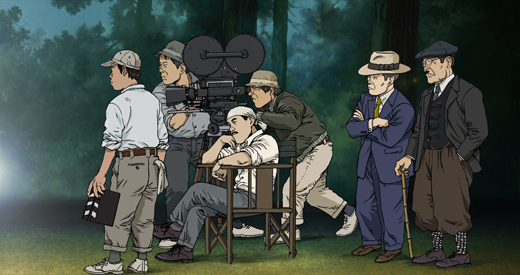
NEZUMIKOZO JIROKICHI (鼠小僧次郎吉) also known as Jirokichi the Rat, the animated short film directed by Rintarō (りんたろう), in which Otomo collaborated as character designer, has had a worldwide release today (with the exception of France and Japan) in BANG BANG - A SHOT OF SHORTS YouTube channel.

This channel is part of NIKITA VENTURES and MIYU DISTRIBUTION, an international sales and festival distribution company of animation short films born from the partnership between SÈVE FILMS (founded in 2014 by Luce Grosjean) and MIYU PRODUCTIONS (Founded by Emmanuel-Alain Raynal in 2009). Miyu Distribution distributes the graduation films of leading animation schools as well as films from independent production structures.

Official website on MIYU PRODUCTIONS: http://miyu.fr
Official website on NIKITA VENTURES: http://nikita-ventures.com

BANG- BANG facebook: http://facebook.com/bangbang.youtubechannel
BANG- BANG instagram: http://instagram.com/bangbang.youtubechannel

FESTIVALS

Mar del Plata International Film Festival, 2024
Buenos Aires Festival Internacional de Cine Independiente, 2024
Fantasia Film Festival, 2023
Sitges - Catalonian International Film Festival, 2023
Annecy International Animation Festival, 2023

ABOUT THE FILM

As the city of Edo is plunged into darkness, a man emerges from the attic of a house. It's the famous Jirokichi, nicknamed Nezumikozo/the Rat, a virtuous bandit who robs the rich to distribute to the poor. Orin leads a difficult life with her young child. Taking advantage of the poor woman's distress, some yakuza try to expose Nezumikozo/The Rat's true identity. Inspired by Sadao Yamanaka’s Nezumikozo Jirokichi – Edo no maki yori, this 2D animated jidaigeki short pays tribute to Japanese samurai cinema, manga animation, and the spirit of classic silent film storytelling.

●SIGNATURE● RINTARO at the 29th OSAMU TEZUKA AWARD


The manga autobiography MA VIE EN 24 IMAGES PER SECONDE by director Rintaro  (りんたろう) won the Grand Prize at the 29th OSAMU TEZUKA AWARD (手塚治虫文化賞), and Otomo who wrote the foreword for the book and is a long time friend and collaborator with him attended the presentation ceremony and commemorative event and signed the message board. Osamu tezuka's son, film director and animator Makoto Tezuka (手塚眞) who also is depicted in Rintaro's manga also attended the event.


In the picture Makoto Tezuka, Rintaro and Katsuhiro Otomo
via Rintaro's Offcial Instagram: @rintaro.offical

●PAMPHLET+POSTER+PV● NEZUMIKOZO JIROKICHI (鼠小僧次郎吉)


The latest short film directed by Rintaro (りんたろう): NEZUMIKOZO JIROKICHI (鼠小僧次郎吉) in which Otomo worked as character designer, was theatrically released today. The film that was previously presented in various animation festivals will show from November 23rd to December 6th at Eurospace (ユーロスペース) in Tokyo

Otomo's character designs and Rintaro's storyboards are collected in the theater brochure that was sold today at the venue. Also available for purchase was the upcoming Japanese edition of Rintaro's first ever manga: 1-BYŌ 24 KOMA NO BOKU NO JISEI (秒24コマのぼくの人生) that collects his memories and experiences and  was first published in France last year. Otomo wrote the foreword of this book.

PAMPHLET DETAILS

Publisher: 
Release date: 2024-XI-23
Language: Japanese
Number of pages:
Size: 
Retail price:

AVAILABILITY


Amazon JP: 
Amazon US:
Amazon CA:
Amazon UK:
Amazon DE:
Amazon FR:
Amazon IT:
Amazon ES:

PROMOTIONAL POSTER


PROMOTIONAL VIDEO

●FOREWORD● RINTARŌ's MA VIE EN 24 IMAGES PER SECONDE


Katsuhiro Otomo has written the foreword to the first comic written by his friend and animation director RINTARŌ (りんたろう) with whom he has collaborated many times in the past. The book was first released in French language by KANA and was presented in this year's 51st edition of ANGOULÊME FESTIVAL where several screenings and meetings were devoted to him.


MA VIE EN 24 IMAGES PER SECONDE narrates Rintarō's  journey from post-war Japan to 2001 and the release of the film METROPOLIS, based on Osamu Tezuka's (手塚 治虫) manga and with screenplay by Otomo himself. This journey is made of meetings, opportunities, endless evenings, jazz, cigarettes, but above all cinema, a passion that was passed on to him by his father and which gave him the desire to become a director very early on. And it is animated cinema that offered Rintarō this opportunity. 

You can read Otomo's foreword in French and the first pages of the comic here


FOREWORD by KATSUHIRO OTOMO

It was in 1958 that HAKUJADEN (白蛇伝 ), the first Japanese animated feature film in color, was made. Then came SHŌNEN SARUTOBI SASUKE (少年猿飛佐助 ), then, in 1960, SAIYUKI (西遊記) adapted from BOKU NO SON GOKU (ぼくのそんごくう) manga by Osamu Tezuka, who was credited in the film as "Original author responsible for the narrative structure'. Indeed, knowing that Tezuka was very influenced by the Disney animations that he loved, TOEI ANIMATION (東映アニメーション) , which wanted to become the Disney of Japan, had asked the mangaka to participate in the pre-production, writing and directing of the film .

Unfortunately, things didn't go the way Tezuka hoped. It's easy to imagine how difficult it was for a young, popular and promising mangaka to get along with the artisan blacksmiths of animation. He must have felt immense frustration and bitterness. At least that's a figment of my imagination. Apologies if I extrapolate!

But isn't Osamu Tezuka a man who uses failure to bounce back? This is how he created his own company, MUSHI PRODUCTION (虫プロダクション), in 1961, just a year after Sayuki. Was he very angry? Had this harsh ordeal triggered a real trigger in him? Still, the following year, he directed ARU MACHIKADO NO MONOGATARI (ある街角の物語) and the first episode of TETSUWAN ATOM (鉄腕アトム ).

From the start, Mushi Production operated recklessly, since, in the event of a financial deficit, Tezuka drew his mangas to cover debts.

The first Japanese television animation, Tetsuwan Atom, was created from Tezuka's own manga, so it was not subject to adaptation rights. It even ultimately generated revenue through the sale of derivative products, and this success led to the proliferation of animated television series. Rintarō's comic strip clearly shows that at the time, at the dawn of this flourishing industry, Mushi Production even ensured human resources devoid of any experience because its production system seemed attractive to certain young people. Unlike Toei animators, endowed with a real educational background and solid technical training, those of Mushi Production launched into the adventure simply being pushed by the spirit of entrepreneurship: the one who has the greatest passion is capable of doing for the best.

How exciting it was to acquire the know-how alongside older animators or the same age, despite the pressure of deadlines and the mountain of work that was piling up! In Japan, this spirit still seems to prevail in this industry.

Mushi Production faced some criticism because its preferred themes were neither educational nor emotion-based, but rather entertainment-oriented. The fact remains that society has enabled previously unknown artists to flourish. And, quite naturally, Japanese animation has moved towards the adaptation of popular manga, since young artists have naturally followed the example of Tezuka, the founder of Mushi Production, who himself adapted his own manga. one after the other. Of course, there were successes and failures!

In the 1970s, television animation therefore developed alongside the rise of manga. Japan was probably the only country experiencing such a phenomenon at the time. Rintarō, too, began directing within Mushi Production, directing works such as JUNGLE TAITEI SUSUME LEO! (ジャングル大帝 進めレオ!) or SABU TO ICHI (佐武と市), before leaving the company to become independent. His series JETTER MARS (ジェッターマルス) , GRAND PRIX NO TAKA (アローエンブレム・グランプリの鷹) and UCHŪ KAIZOKU CAPTAIN HARLOCK (宇宙海賊キャプテンハーロック)  attracted the attention of the president of TOEI so much so that he entrusted Rintarō with the direction of the feature film GINGA TETSUDO 999 (銀河鉄道999)  which was a huge success. This is how animated television series reached the level of quality of a feature film. Subsequently, feature films were screened in international festivals, then occupied a dominant place with the arrival of video cassettes, laserdiscs and DVDs. And it is therefore thanks to the influence of these precursors that today young people are creating original animations all over the world.

By reading this comic, which closely combines the history of animation with Rintarô's personal life, from his childhood to his adolescence and adulthood, I realize how much I owe to my elders, the "anarchists" from the Showa era (1926-1989), which I warmly thank.

大友克洋

BOOK DETAILS

Publisher: KANA
Release date: 2024-I-26
Language: French
Number of pages: 256
Size: 22.8 x 2.8 x 30 cm
Retail price: 27.9€
ISBN-10: 2505076383
ISBN-13: 978-2505076384

AVAILABILITY
Amazon JP: -
※We earn a commission from your purchases through these links.

JAPANESE EDITION
1-BYŌ 24 KOMA NO BOKU NO JISEI (秒24コマのぼくの人生)

Publisher: Kawade Shobō Shinsha (河出書房新社)
Release date: 2024-XII-2
Language: Japanese
Number of pages: 256
Size: 22.8 x 29.7 cm
Retail price: ¥3,520
ISBN-10: 4309257844
ISBN-13: 978-4309257846

AVAILABILITY
Amazon US: 
※We earn a commission from your purchases through these links.

US EDITION
MY LIFE IN 24 FRAMES PER SECOND

Publisher: Harry N. Abrams
Release date: 2025-X-7
Language: English
Number of pages: 256
Size: 22.8 x 29.7 cm
Retail price: $29.99
ISBN-10: 1419784048
ISBN-13: 978-1419784040

AVAILABILITY
※We earn a commission from your purchases through these links.

●ANIMATION FILM● NEZUMIKOZO JIROKICHI (鼠小僧次郎吉)

Today it was premiered at the 1st NIIGATA INTERNATIONAL ANIMATION FILM FESTIVAL (第1回新潟国際アニメーション映画祭) in Niigata Civic Plaza (新潟市民プラザ), the latest project by  director Rintaro (りんたろう), titled NEZUMIKOZO JIROKICHI (鼠小僧次郎吉), a 25 minute long animated manga-movie tribute to Sadao Yamanaka (山中貞雄) a Japanese film director and screenwriter who directed 26 films between 1932 and 1938. Katsuhiro Otomo was involved as the character designer in the film.

INTRODUCTION

During the early days of Japanese cinema, spanning from the silent film era to the early days of talkies, director Sadao Yamanaka (山中 貞雄) rose to prominence before his untimely death at a young age. One of the works he left behind, NEZUMIKOZŌ JIROKICHI - EDO NO MAKI (鼠小僧次郎吉-江戸の巻) [The Life of Jirokichi the Rat – Edo Chapter], has now been reimagined as a silent animation by Rintaro, the renowned Japanese animation director known for GINGA TETSUDŌ 999 (銀河鉄道999) and GENMA TAISEN (幻魔大戦).

This unprecedented and unique visual project is supported by an impressive lineup: character design by Katsuhiro Otomo, celebrated worldwide for Domu and AKIRA, and Yoshinori Kanemori (兼森 義則), known for Yawara! and PLUTO. The music is composed by saxophonist and composer Toshiyuki Honda (本多 俊之), while the role of the benshi (silent film narrator) is performed by Mami Koyama (小山 茉美), the voice actress famous for her role as Arale Norimaki in Dr. Slump.

This marks the birth of a bold new challenge in animation.


STORY

When the eight hundred and eight districts of Edo are cloaked in the darkness of night, a certain figure stirs in the attic shadows. You know him well—the chivalrous thief Jirokichi the Rat, who steals from the wealthy and shares his bounty with the poor townsfolk.

In the bustling city lives Osuzu, a commoner who, after losing her husband, struggles through harsh days with her young child. But her hardships do not go unnoticed; Bonji Angorō and Chōgorō, schemers with their own agendas, aim to use her to unmask the true identity of Jirokichi.

And then there’s Kan’emon, a seasoned and intuitive police officer hailed as a master detective. His motto: “Hate the sin, not the sinner.”

Set against the vibrant backdrop of Edo, this poignant human drama unfolds—a tale of sorrow, hope and connection.


RINTARO'S COMMENTS

[Long, Long Ago]
With a long jaw, unkempt beard, a hand towel wrapped around his head, and thin geta sandals on his feet, film director Sadao Yamanaka made a striking figure as he raced through Japan’s silent and early talkie film eras, passing away at the young age of 29. I first came to know his name while working on the TV anime adaptation of Shotaro Ishinomori’s Sabu and Ichi’s Detective Tales.

As it was the first period drama anime, director Teiji Matsuda, who had been active since the silent era, supervised the post-recording sessions. Matsuda told me about the brilliance of Sadao Yamanaka, but years passed without me having a chance to watch any of his works. Then, one day, I encountered Yamanaka’s Humanity and Paper Balloons at a theater called Namiki-za, tucked away in the basement of a small building in Ginza.

The entire film was suffused with an oppressive sense of tragedy that weighed heavily on the viewer. I still vividly remember leaving the theater deeply moved, particularly by the ephemeral final scene, where a paper balloon—a symbolic motif—drifts softly down a gutter in a dimly lit alley.

Later, with the release of VHS and DVDs, I was able to watch Tange Sazen and the Pot Worth a Million Ryo and Kōchiyama Sōshun. I was in awe of Yamanaka’s skillful and modern touch in Tange Sazen, where he succinctly captured the story with lighthearted sophistication. Meanwhile, Kōchiyama Sōshun showcased his meticulous craftsmanship, modern cinematic style, and remarkable ability to shape characters, leaving me completely captivated.

When I learned about another side of Yamanaka—how he would draw flipbook animations or caricatures in the margins of his notebooks—and how his friends affectionately called him “Long, Long Ago” because of his long jaw, I grew even fonder of him as a person.

This short animated film we’ve created is a modest homage from our team to the late director Sadao Yamanaka. It is based on The Life of Jirokichi the Rat – Edo Chapter, a script he wrote. Yamanaka once wrote in a wartime journal, “It’s a bit sad if Humanity and Paper Balloons remains my final work.” If we could present this new work to him, even if just a little, it would make us happy.


MAIN CREDITS

CAST
Mami Koyama (小山 茉美)
Michitake Kikuchi (菊池 通武)
Takahiro Sumi (鷲見 昂大)
Yuuki Hoshi (星 祐樹)

STAFF
Screenplay:
Sadao Yamanaka  (山中 貞雄) 

Original story: 
Based on  Jirō Osaragi's (大佛 次郎)
"Nezumikozo Jirokichi Edo no Maki"

Director and Adaptation:
Rintaro (りんたろう)

Character design: 
Katsuhiro Otomo (大友克洋)
Yoshinori Kanemori (兼森 義則)

Editing:
Kazuhiro Nii (新居 和弘)

Music:
Toshiyuki Honda (本多 俊之)

Producers:
Masao Maruyama (丸山 正雄)
Taro Maki (真木 太郎)
Emmanuel-Alain Raynal
Pierre Baussaron

Animation production:

Production:
Miyu Productions

Japan-France co-production / 2023 / 23 min

●ANNOUNCEMENT● NEZUMIKOZO JIROKICHI (鼠小僧次郎吉)

Long time Otomo friend and collaborator director Rintaro (りんたろう) will debut his latest work in 14 years, titled NEZUMIKOZO JIROKICHI (鼠小僧次郎吉), a 25 minute long animated manga-movie tribute to Sadao Yamanaka (山中貞雄) a Japanese film director and screenwriter who directed 26 films between 1932 and 1938. Katsuhiro Otomo was involved as the character designer in the film.

The premiere will take place on march 20, 2023 at the 1st NIIGATA INTERNATIONAL ANIMATION FILM FESTIVAL (第1回新潟国際アニメーション映画祭) in Niigata Civic Plaza (新潟市民プラザ). The festival will take place from March 17 to 22 and tickets are already on sale in the festival's website. 

In addition to this and many other animated works the festival will pay tribute to Otomo's filmmaker career presenting a retrospective of his works.

SCHEDULED FILMS

Cine Wind / March 18 / 10:00 am
Cine Wind / March 20 / 12:15 pm

AKIRA (Digitally Remastered Edition)
Cine Wind / March 18 / 12:40 pm
Cine Wind / March 20 / 3:00 pm

Cine Wind / March 19 / 10:00 am
Cine Wind / March 21 / 4:40 pm

Cine Wind / March 19 / 12:15 pm
Cine Wind / March 21 / 10:00 am

Cine Wind / March 19 / 4:40 pm
Cine Wind / March 21 / 7:00 pm

Cine Wind / March 19 / 7:00 pm
Cine Wind / March 20 / 5:30 pm

ROUJIN Z (老人Z) + GUNDAM: Mission to the Rise + ROBOT CARNIVAL (ロボットカーニバル) OP・ED + DŌMU pilot (童夢パイロット版)
Cine Wind / March 20 / 10:00 am
Cine Wind / March 21 / 12:40 pm

Niigata Citizen Plaza / March 20 / 12:00 pm

●BOOK● ANIME ARCHITECTURE

This second book by Stefan Riekeles, ANIME ARCHITECTURE: Imagined Worlds and Endless Megacities, presents the fantastic environments created by the most important and revered directors and illustrators of Japanese animated films. Anime Architecture celebrates the cityscapes of animated films such as:

AKIRA (1988) directed by Katsuhiro Otomo (大友克洋)
■Patlabor: The Movie (1989) directed by Mamoru Oshii (押井 守)
■Patlabor 2: The Movie (1993) directed by Mamoru Oshii (押井 守)
■Ghost in the Shell (1995) directed by Mamoru Oshii (押井 守)
Metropolis (2001) directed by Rintaro (りんたろう) Screenplay by Otomo
■Innocence (2004) directed by Mamoru Oshii(押井 守)
■Tekkonkinkreet (2006) directed by Michael Arias
■Rebuild of Evangelion (2007, 2009) directed by Hideaki Anno (庵野 秀明)

Unprecedented access to vast studio archives of original background paintings, storyboards, drafts, and film excerpts offers readers a privileged view into the earliest stages of conception, development, and finished versions of iconic scenes.

BOOK DETAILS

Publisher: Thames & Hudson 
Release date: 2020-XI-17
Language: English
Number of pages: 256
Size: 8.8 x 1.2 x 11.4 inches
Retail price: $45
ISBN-10: 0500294526
ISBN-13: 978-0500294529

AVAILABILITY

Amazon US: https://amzn.to/3dOtyjK
※We earn a commission from your purchases through these links.

Signed and dedicated copies: http://riekeles.com (Worldwide shipping)

●DVD● STEAMBOY STARTER KIT


STEAM BOY STARTER KIT (スチームボーイ スターターキット) is a promotional DVD box released by BANDAI VISUAL containing the first look to STEAM BOY, Katsuhiro Otomo's last animation film that will be released in theaters in Japan on July 17, 2004. The box includes a DVD and a T-shirt designed by Katsuhiro Otomo


DVD CONTENTS

■"48 × 61" A short film directed by Rintaro (6 min)
■A video message by Rintaro (8min)
■Making of SteamBoy (20 min)
■SteamBoy promotional video (6min)

DVD DETAILS

Publihser: Bandai Visual (バンダイビジュアル)
Release date: 2004-VI-25
Format: NTSC | Region 2 | DVD5
Audio: Japanese Dolby Digital Stereo
Running time: 52 min
Retail Price: ¥3,990
Catalogue number: BCBA-1966

AVAILABILITY

●BOOK● KATSUHIRO OTOMO X METROPOLIS (大友克洋×メトロポリス)


This book contains the METROPOLIS (メトロポリス) screenplay written by Katsuhiro Otomo and based in a manga by the legendary Osamu Tezuka (手塚 治虫). This animation film directed by Rintaro (りんたろう) was released Theatrically in Japan on April 26, 2001. A two page comic by Otomo is included as afterword.


BOOK DETAILS

Publisher: Kadokawa (角川書店)
Release date: 2001-VII-1
Language: Japanese
Number of pages: 127
Size: 21.2 x 15 x 1.6 cm (A5)
Retail price: ¥1,800
ISBN-10: 4048533770
ISBN-13: 978-4048533775

AVAILABILITY

●ANIMATION FILM● METROPOLIS (メトロポリス)


Today it was released in Japanese theaters METROPOLIS (メトロポリス), the last animation movie by director Rin Taro (りんたろう) with the screenplay written by Katsuhiro Otomo (大友 克洋) and based on the manga by the legendary Osamu Tezuka (手塚 治虫).


MAIN FILM CREDITS


Directed by
Rintaro (りんたろう)

Screenplay: 
Katsuhiro Otomo (大友 克洋) 

Music: 
Toshiyuki Honda (本多 俊之)

Original Manga: 
Osamu Tezuka (手塚 治虫)

Character Design & Chief Animation Director: 
Yasuhiro Nakura (名倉 靖博)

Art Director, Background art supervisor & Character Color Design:
Shuichi Hirata (平田 秀一)

Sound Director: 
Masafumi Mima (三間 雅文)

Director of Photography: 
Hitoshi Yamaguchi (山口 仁)

CGI Supervision: 
Tsuneo Maeda (前田 庸生)

Character Mechanics:
Seiji Handa (反田 誠二)

Color setting:
Osamu Mikasa (三笠 修)

Digital Work:
Kazuhiro Kinoshita (木下 和宏)
Yuji Ikehata (池畑 祐治)

Key Animation Supervisor:
Kunihiko Sakurai (桜井 邦彦)
Shigeo Akahori (赤堀 重雄)
Shigeru Fujita (藤田 しげる)

Layout:
Hisashi Abe (阿部 恒)
Yoshiaki Kawajiri (川尻 善昭)
Yoshinori Kanemori (兼森 義則)

Project Initiation:
Masao Maruyama (丸山 正雄)
Rintaro ((りんたろう))
Shigeru Watanabe (渡辺 繁)

Theme Song Composition: 
Joe Primrose ("St. James Infirmary")

Theme Song Performance:
Atsushi Kimura (木村 敦) ("St. James Infirmary")

Minako Obata (ED)
Ray Charles ("I Can't Stop Loving You")

Animation Production: 
MADHOUSE  (マッドハウス)

CG Effects:
Animation Staff Room
Dr. Movie
IKIF+
Satelight  (サテライト)
Studio 4°C

Conceptual Support: 
Tezuka Productions (手塚プロダクション)

Digital Paint:
Dr. Movie
Kyung Kang ANIA (京江ANIA)

Distributor: 
Bandai Visual

Editing:
Nakamizo Editing Room

In-Between Animation:
Beijing Xie Le Art Co., Ltd. (北京写楽美術芸術品有限公司)
Dr. Movie
Kyung Kang ANIA (京江ANIA)
Mushi Production (虫プロダクション)
Oh! Production (オープロダクション)
Tezuka Productions (手塚プロダクション)

Key Animation: 
Oh! Production (オープロダクション)

Laboratory: 
Imagica ( イマジカ)

Music Production: 
Victor Entertainment

Production:
Bandai Visual (バンダイビジュアル)
Dentsu Inc. (電通)
Imagica ( イマジカ)
Kadokawa Shoten ( 角川書店)
Metropolis Production Partners
Sony Pictures Entertainment Inc. (ソニー・ピクチャーズ エンタテインメント)
Starchild Records (スターチャイルドレコード)
Tezuka Productions Co., Ltd. (手塚プロダクション)
TOHO (東宝株式会社)


●TV● TEZUKA OSAMU NO ISAN Atom to Akira Otomo Katsuhiro ga kataru Tezuka Osamu (手塚治虫の遺産 アトムとAKIRA~大友克洋が語る手塚治虫~)


NHK has aired today two ETV special programs on the heritage of Osamu Tezuka. The second one TEZUKA OSAMU NO ISAN: ATOM TO AKIRA  ~Otomo Katsuhiro ga kataru Tezuka  Osamu~ (手塚治虫の遺産 アトムとAKIRA~大友克洋が語る手塚治虫~) featuring Katsuhiro Otomo, follows him visiting the workplaces of Osamu Tezuka and commenting on his works, it also features talks with Osamu Akimoto (秋本治), Fujiko F Fujio (藤子F不二雄) and Rintaro (りんたろう)

●ANIMATION FILM● MANIE-MANIE MEIKYU MONOGATARI (MANIE-MANIE 迷宮物語)


Today it was premiered in this year's Tōkyō International Fantastic Film Festival, MANIE-MANIE MEIKYU MONOGATARI (MANIE-MANIE 迷宮物語). An omnibus project in which directors Yoshiaki Kawajiri (川尻 善昭), Rintaro (りんたろう) and Kastuhiro Otomo (大友 克洋)  have collaborated with three short films. Other than festival screenings the film was directly released in video format in October 10, 1987. Later on April 15, 1989 it was released  theatrically in Japan. The 50 minute long project consisted on three short films: HASHIRU OTOKO (走る男), LABYRITH (ラビリンス) and KOUJI CHUUSHI MEIREI (工事中止命令 ) this last one written and directed by Katsuhiro Otomo.


MAIN FILM CREDITS

HASHIRU OTOKO (走る男) ●
Written & Directed by 
Yoshiaki Kawajiri (川尻 善昭)

Character Design & Animation direction:
Yoshiaki Kawajiri (川尻 善昭)

Art Director:
Katsushi Aoki (青木 勝志)

Mechanical design:
Satoshi Kumagaya
Takashi Watabe (渡部 隆)

Background Art:
Yuji Ikehata (池畑 祐治)

Key Animation:
Kengo Itagaki (稲垣 賢吾)
Nobumasa Shinkawa (新川 信正)
Shinji Otsuka (大塚 伸治)
Toshio Kawaguchi (河口 俊夫)


●LABYRITH (ラビリンス)●
Written and Directed by
Rintaro (りんたろう)

Character Design & Animation Director:
Atsuko Fukushima (福島 敦子)

Art Director: 
Yamako Ishikawa (石川 山子)

Key Animation:
Atsuko Fukushima (福島 敦子)
Manabu Oohashi 'Mao Lambo' (大橋 学)
Reiko Kurihara (栗原 玲子)


●KOUJI CHUUSHI MEIREI (工事中止命令 )●
written and directed by 
Kastuhiro Otomo (大友 克洋) 

Music:
Mickey Yoshino (ミッキー 吉野)

Original story: 
Taku Mayumura (眉村 卓)

Character Design: 
Katsuhiro Otomo

Art Director:
Takamura Mukuo (椋尾 篁)

Animation director:
 Takashi Nakamura (なかむら たかし)

Director of Photography:
Kinichi Ishikawa (石川 欣一)

Key Animation:
Katsuhiro Otomo (大友 克洋) 
Koji Morimoto (森本 晃司)
Kunihiko Sakurai (桜井 邦彦)
Takashi Nakamura  (なかむら たかし)


Animation Production:
Project Team Argos

Distributor: 

Finish Animation:
Life Work Corp. (ライフワーク)
Shima Studio

Finish Animation Cooperation:
Only For A Lite
Suzuki Animation Planning (スズキ動画企画)

In-Between Animation Cooperation:
Studio Pokke

Production:

●ANIMATION FILM● GENMA TAISEN (幻魔大戦)


Today it was released in Japan GENMA TAISEN (幻魔大戦) the last animation film directed by Rintaro (りんたろう) in which Katsuhiro Otomo has collaborated as character designer. The movie is based in the novel written by Kazumasa Hirai (平井 和正) that was also adapted to manga by Shotaro Ishinomori (石ノ森 章太郎) and started it's serialization in 1967 in Weekly Shōnen Magazine (週刊少年マガジン)

FILM CREDITS


Directed by
Rintaro (りんたろう)

Screenplay:
Chiho Katsura (桂 千穂)
Makoto Naito (内藤 誠)
Mori Masaki (真崎 守)

Music: 
Nozomi Aoki (青木 望)

Original story:
Kazumasa Hirai (平井 和正)
Shotaro Ishinomori (石ノ森 章太郎)

Character Design: 
Katsuhiro Otomo (大友 克洋) 

Art Director: 
Takamura Mukuo (椋尾 篁)

Animation Director: 
Takuo Noda (野田 卓雄)

Director of Photography: 
Iwao Yamaki

Art Department Assistant:
Kazuo Oga (男鹿 和雄)
Tadao Kubota (窪田 忠雄)

Assistant Animation Director: 
Kazuo Tomizawa (富沢 和雄)

Color Coordination:
Yoshiharu Wakai (若井 喜治)

Editing:
Osamu Tanaka (田中 修)

Finish Check:
Emiko Matsumoto (松元 恵美子)
Michiyo Iriomote (西表 美智代)

Music Director:
Keith Emerson

Executive producer:
Haruki Kadokawa (角川 春樹)
Shotaro Ishinomori (石ノ森 章太郎)

Producer:
Susumu Aketagawa (明田川 進)

Animation: 

Background Art:

Distributor:

In-Between Animation:
Anime Toro Toro (アニメトロトロ)
Kusama Art (草間アート)
Meruhen-Sha (メルヘン社)
Tiger Production (タイガープロダクション)

Production:

●MAGAZINE● VARIETY GENMA TAISEN SPECIAL (バラエティ 幻魔大戦スペシャル)

This month's Japanese Variety (バラエティ)Magazine features a special report on the upcoming animation film GENMA TAISEN (幻魔大戦) directed by Rintaro (りんたろう) , with character designs by Katsuhiro Otomo. The magazine collects many Otomo settings and sketches as well as a foldout poster illustrated by him.

VARIETY GENMA TAISEN SPECIAL (バラエティ 幻魔大戦スペシャル)

MAGAZINE DETAILS
Publisher: Kadokawa (角川書店)
Release date: 1982-XII-1
Language: Japanese
Number of pages: 128
Size: B5 variant
Retail price: ¥490


Available in Amazon JP:
https://amzn.to/3pwzns5